Go Back
To make Ginger Soy Glazed Salmon, you need a few key ingredients. Here they are: - 4 salmon fillets (approximately 6 ounces each) - 1/4 cup soy sauce (preferably low sodium) - 2 tablespoons fresh ginger, finely grated - 2 tablespoons honey (or maple syrup for a vegan option) - 2 cloves garlic, minced - 1 tablespoon sesame oil - 1 tablespoon rice vinegar - 1/4 teaspoon freshly ground black pepper These ingredients create a rich and flavorful glaze. The ginger adds a warm spice, while the soy sauce gives it a nice umami kick. Garnishing your salmon makes it look and taste even better. You can use: - 1 tablespoon green onions, thinly sliced - A sprinkle of sesame seeds These garnishes add color and a little crunch. They make your dish more appealing and tasty. You can easily swap some ingredients if needed. Here are a few options: - For honey, use maple syrup for a vegan dish. - If you don’t have sesame oil, olive oil works well too. - You can replace fresh ginger with ground ginger, but use less. These substitutions help you adapt the recipe to what you have at home. I love finding ways to make recipes work with different ingredients. {{ingredient_image_2}} To start, grab a small mixing bowl. Add 1/4 cup of soy sauce. I like using low-sodium soy sauce for better flavor without too much salt. Next, add 2 tablespoons of finely grated fresh ginger. This gives the salmon a nice kick! Then, mix in 2 tablespoons of honey or maple syrup if you prefer a vegan option. Don't forget 2 minced garlic cloves for depth. Add 1 tablespoon of sesame oil and 1 tablespoon of rice vinegar for balance. Finally, sprinkle in 1/4 teaspoon of freshly ground black pepper. Whisk all these items until they blend well, making sure the honey dissolves completely. Now, you need to marinate the salmon. Take 4 salmon fillets, about 6 ounces each. Place them in a shallow dish or a resealable plastic bag. Pour your ginger soy marinade over the fillets. Make sure each piece gets coated well. Cover the dish or seal the bag tightly. Let it chill in the fridge for at least 30 minutes. This time allows the flavors to soak into the fish, making it taste amazing. You can cook the salmon in two ways: grilling or baking. If you choose grilling, preheat your grill to medium-high heat. Brush the grill grates lightly with cooking oil to stop sticking. For baking, preheat your oven to 400°F (200°C) and line a baking sheet with parchment paper for easy cleanup. Remove the salmon from the marinade. Keep the marinade for later. Place the salmon on the grill or the baking sheet. If grilling, cook for 4-6 minutes on each side. If baking, it will take about 12-15 minutes. Right before it's done, brush some of the reserved marinade on the salmon for extra flavor. You'll know it is ready when it flakes easily with a fork. After cooking, let the salmon rest for a couple of minutes. This helps keep it juicy. To serve, place the salmon fillets on plates. Drizzle any leftover glaze from the baking sheet or grill over the fish. Garnish each fillet with thinly sliced green onions and a sprinkle of sesame seeds. This makes the dish look pretty and adds a nice crunch. Enjoy your meal alongside steamed jasmine rice or a veggie stir-fry for a complete dish! To get that shiny glaze, use low sodium soy sauce. This helps balance flavors. Mix the soy sauce with fresh ginger, honey, and garlic. Whisk until smooth. Marinate the salmon for at least 30 minutes. This lets the flavors soak in. For a thicker glaze, reduce the marinade in a pan after cooking. This adds a rich finish. Cook salmon until it flakes easily. This means it is done. Use a fork to test it. For grilling, aim for 4-6 minutes per side. If baking, around 12-15 minutes works well. Keep an eye on it to avoid overcooking. If your salmon is thick, it may need more time. A meat thermometer can help; it should read 145°F (63°C). Adding a squeeze of lime can brighten the dish. You can also toss in some red pepper flakes for heat. Consider adding chopped herbs like cilantro or basil. These can give a fresh twist. If you love crunch, sprinkle some chopped nuts on top. These tips make your dish even more exciting! Pro Tips Marinate Longer for More Flavor: If you have the time, marinate the salmon for 1-2 hours for an even deeper flavor profile. Keep an Eye on Cooking Time: Salmon can cook quickly; check for doneness a minute or two earlier to avoid overcooking. Use Fresh Ingredients: Fresh ginger and garlic will enhance the flavor of the glaze significantly compared to dried versions. Experiment with Additions: Feel free to add a splash of citrus juice or a dash of chili flakes for a unique twist on the glaze. {{image_4}} You can switch the salmon for other fish like trout or tilapia. These fish absorb flavors well. Chicken is another great option. Use the same marinade and cook until done. For shrimp lovers, marinate shrimp in the mixture. They cook fast, so watch them closely. If you prefer a plant-based dish, tofu works great. Use firm tofu for the best texture. Press it to remove water, then cut it into cubes. Marinate the tofu just like the salmon. You can also try tempeh for a nutty flavor. Cook it until golden brown for a crispy bite. Change the soy sauce to tamari for a gluten-free version. You can also add lime juice for a citrus twist. Experiment with spices like chili flakes for heat. For a sweet touch, try adding orange juice instead of honey. Each change brings a new taste to your table. To store leftover ginger soy glazed salmon, place it in an airtight container. Ensure the lid is tight to keep out air. You can refrigerate it for up to three days. The flavors will continue to blend, making it even tastier. When reheating salmon, the goal is to keep it moist. Preheat your oven to 275°F (135°C). Place the salmon on a baking sheet. Cover it with foil to trap steam. Heat for about 15 minutes or until warm. You can also reheat it in a skillet over low heat for a few minutes. If you have extra salmon, freezing works well. Wrap each fillet tightly in plastic wrap. Then, place them in a freezer bag. This keeps them fresh for up to three months. When ready to eat, thaw it in the fridge overnight before reheating. Yes, you can use frozen salmon. Just make sure to fully thaw it first. Thawing helps the fish cook evenly. Place it in the fridge overnight or use the cold water method. Seal it in a bag and submerge it in cold water for about an hour. Once thawed, pat it dry before marinating. This way, the glaze sticks better to the fish. To keep salmon moist, marinate it for at least 30 minutes. The ginger soy mix adds flavor and moisture. When cooking, avoid overcooking the salmon. Cook it until it flakes easily with a fork. Let it rest for a few minutes after cooking. This step helps the juices redistribute, making it even more tender. Ginger soy glazed salmon goes well with many sides. Try serving it with steamed jasmine rice for a classic match. A vibrant vegetable stir-fry adds color and crunch. You can also pair it with a fresh salad, like a cucumber salad or a simple mixed greens salad. These options balance the rich flavors of the salmon. This blog post covered all you need to know about making Ginger Soy Glazed Salmon. We discussed key ingredients and optional garnishes. You learned how to prepare the marinade and cook the salmon. Tips for the perfect glaze and flavor additions were shared. Variations and storage tips showed how to keep it fresh. Try this recipe for a tasty meal. Enjoy your cooking, and don’t forget to share!

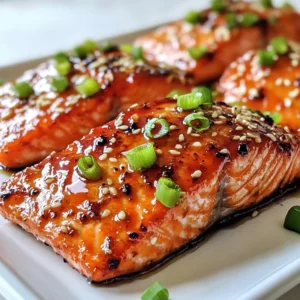
Ginger Soy Glazed Salmon

A flavorful salmon dish marinated in a ginger soy glaze, perfect for grilling or baking.
Prep Time 10 minutes
Cook Time 35 minutes
Total Time 45 minutes
Course Main Course
Cuisine Asian
Servings 4
Calories 350 kcal

Ingredients
  

  • 4 fillets salmon (approximately 6 ounces each)
  • 0.25 cup soy sauce (preferably low sodium)
  • 2 tablespoons fresh ginger, finely grated
  • 2 tablespoons honey (or maple syrup for a vegan option)
  • 2 cloves garlic, minced
  • 1 tablespoon sesame oil
  • 1 tablespoon rice vinegar
  • 0.25 teaspoon freshly ground black pepper
  • 1 tablespoon green onions, thinly sliced (for garnish)
  • 1 sprinkle sesame seeds (for garnish)

Instructions
 

  • In a small mixing bowl, combine the soy sauce, freshly grated ginger, honey, minced garlic, sesame oil, rice vinegar, and black pepper. Whisk these ingredients together until the mixture is well combined and the honey is fully dissolved.
  • Take the salmon fillets and place them in a shallow dish or resealable plastic bag. Pour the ginger soy marinade over the fillets, ensuring that each piece is thoroughly coated. Cover the dish or seal the bag, and refrigerate for a minimum of 30 minutes to allow the flavors to meld and penetrate the fish.
  • Preheat your grill to medium-high heat, or preheat your oven to 400°F (200°C).
  • If grilling, lightly brush the grill grates with cooking oil to prevent sticking. If baking, line a baking sheet with parchment paper for easy cleanup. Place the salmon fillets on the prepared sheet or grill, removing them from the marinade but retaining the marinade for later use.
  • Grill the salmon for approximately 4-6 minutes on each side, or bake in the oven for 12-15 minutes. During the last few minutes of cooking, brush the salmon with the reserved marinade for an extra layer of flavor. The salmon is ready when it flakes easily with a fork.
  • Once cooked through, remove the salmon from the heat source and let it rest for a couple of minutes. This helps maintain its moisture and enhances the flavors.
  • For serving, place the salmon fillets on individual plates. Drizzle any remaining glaze from the baking tray or grill over the fillets, then garnish with sliced green onions and a sprinkle of sesame seeds for an appealing presentation.

Notes

Pair with steamed jasmine rice or a vegetable stir-fry for a complete meal.
Keyword baked, ginger, grilled, salmon, soy sauce