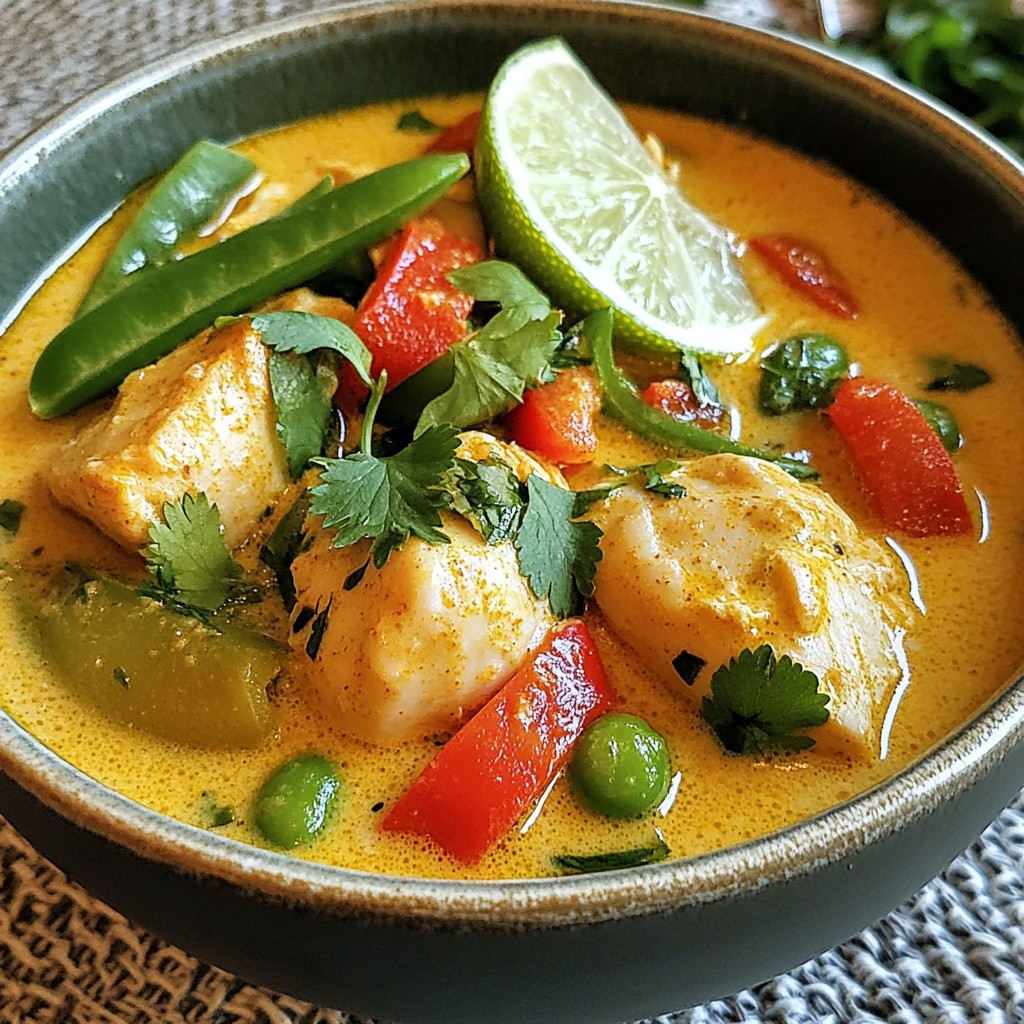
Welcome to your new favorite comfort food! This Thai Coconut Chicken Curry Soup is packed with flavor and easy to make. Whether you're a busy parent or a cooking enthusiast, you’ll love how simple it is to whip up this dish. With fresh ingredients and a few quick steps, you can enjoy a warm bowl of goodness in no time. Ready to impress your family and friends? Let’s dive in!
Why I Love This Recipe
- Bold Flavors: The combination of coconut milk and red curry paste creates a rich and aromatic base that is both comforting and exciting.
- Quick and Easy: With a total cooking time of just 30 minutes, this soup is perfect for busy weeknights or last-minute dinner plans.
- Nutritious Ingredients: Packed with veggies and lean protein, this soup is as healthy as it is delicious, making it a great option for a balanced meal.
- Customizable: Feel free to swap in your favorite vegetables or adjust the spice level, allowing you to tailor the recipe to your taste preferences.
Ingredients
Detailed List of Ingredients
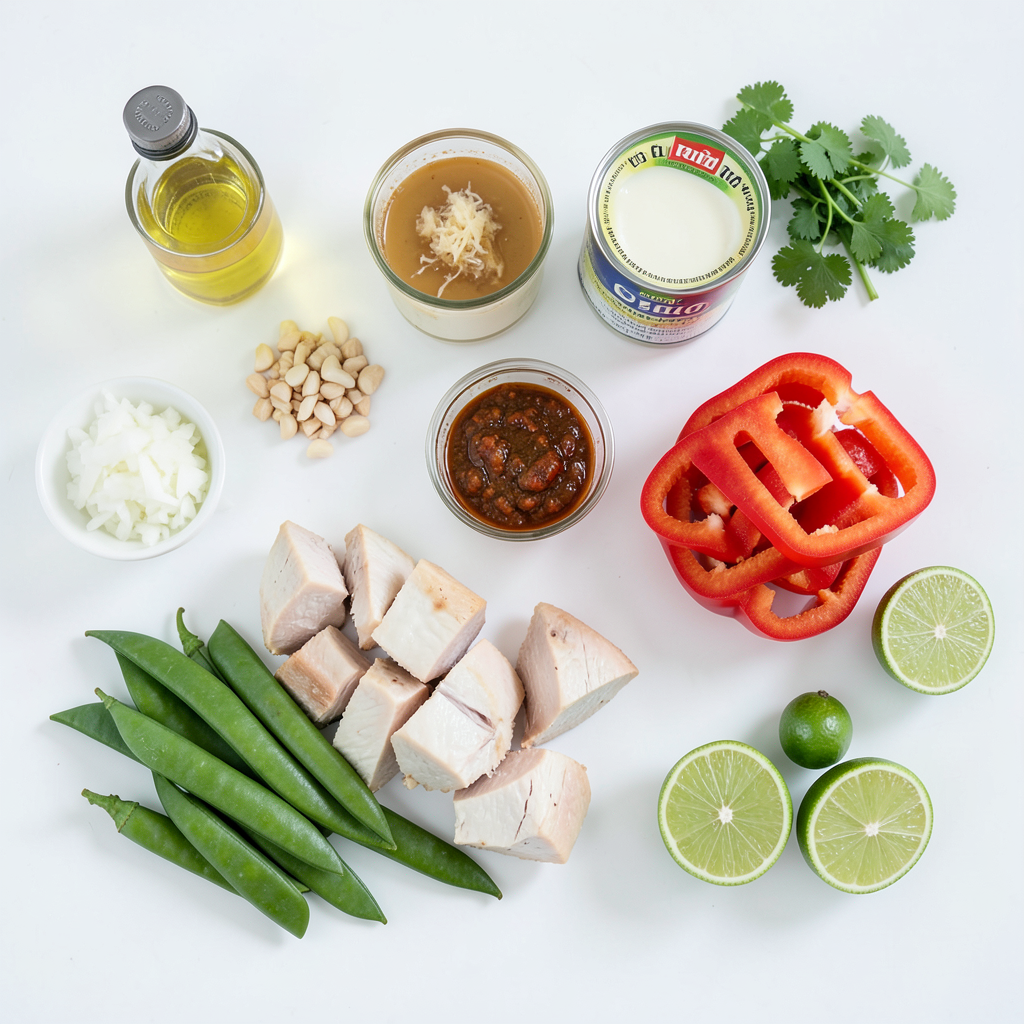
To make Thai Coconut Chicken Curry Soup, gather these ingredients:
- 2 tablespoons coconut oil
- 1 medium onion, finely chopped
- 3 cloves garlic, minced
- 1-inch piece of ginger, grated
- 2 tablespoons red curry paste
- 4 cups chicken broth (homemade or store-bought)
- 1 can (14 oz) coconut milk
- 1 pound boneless, skinless chicken thighs, cut into bite-sized pieces
- 1 red bell pepper, sliced into thin strips
- 1 cup snap peas or green beans, trimmed
- 2 tablespoons fish sauce (or soy sauce for a vegetarian-friendly option)
- 1 tablespoon brown sugar, packed
- Juice of 1 fresh lime
- Fresh cilantro leaves, for garnish
- Lime wedges, for serving
Substitutes for Key Ingredients
If you need substitutes, here are some options:
- Coconut oil can be swapped with vegetable oil or olive oil.
- You can replace chicken thighs with chicken breast if desired.
- Red curry paste can be switched with green curry paste for a different taste.
- For fish sauce, use soy sauce or tamari to keep it vegetarian.
- You can substitute snap peas with green beans or broccoli.
Tips for Selecting Fresh Produce
When choosing your produce, look for:
- Onions: They should feel firm and be free from soft spots.
- Bell Peppers: Choose peppers that are bright and shiny. Avoid wrinkled ones.
- Snap Peas: They should be crisp and vibrant green. No yellowing is ideal.
- Ginger: Look for fresh ginger that feels firm and has smooth skin.
- Cilantro: Pick cilantro with bright green leaves. Avoid any wilting or browning.
Selecting fresh ingredients makes your soup taste better. Enjoy the process!
Step-by-Step Instructions
Preparing the Base (Sautéing and Flavor Building)
Start by melting 2 tablespoons of coconut oil in a large pot over medium heat. Add 1 medium onion, finely chopped. Sauté the onion for about 3-4 minutes. You want it to become soft and clear. Then, add 3 cloves of minced garlic and a 1-inch piece of grated ginger. Cook this mix for 1 more minute. The smell will be amazing! Next, stir in 2 tablespoons of red curry paste. Let it cook for about 2 minutes. This builds a great flavor base for your soup.
Combining Ingredients and Cooking Process
Now, pour in 4 cups of chicken broth. Be sure to scrape the pot's bottom to get all those tasty bits. Stir until well mixed and bring it to a gentle simmer. Once it's simmering, add 1 can of coconut milk. This makes your soup creamy and rich. Then toss in 1 pound of boneless, skinless chicken thighs, cut into bite-sized pieces. Add 1 sliced red bell pepper and 1 cup of snap peas. Cook for 12-15 minutes. The chicken should be fully cooked, and the veggies will stay bright and crisp.
Final Touches and Serving Suggestions
Taste your soup! Add 2 tablespoons of fish sauce, or soy sauce for a vegetarian option. Stir in 1 tablespoon of brown sugar and the juice of 1 fresh lime. Adjust these flavors to suit your taste. After the soup is ready, take the pot off the heat. Let it rest for a couple of minutes. Serve the soup in deep bowls. Garnish each bowl with fresh cilantro leaves. A lime wedge adds a nice touch and extra flavor. Enjoy your delicious Thai Coconut Chicken Curry Soup!
Tips & Tricks
How to Customize the Spice Level
You can make your soup as spicy as you like! Start with a small amount of red curry paste. Taste your soup as you add more. If you want more heat, add chili flakes or fresh chilies. For a milder soup, use less paste or add more coconut milk.
Best Practices for Meal Prep
Meal prep can save you time and effort. Chop your veggies and store them in airtight bags. You can also cook the chicken ahead. Freeze portions in small bags. When you're ready to cook, just heat and add. This way, your soup will be quick and easy.
Common Mistakes to Avoid
One common mistake is cooking the chicken too long. This can make it dry. Always check for doneness with a meat thermometer. Another mistake is adding too much fish sauce. Start with a little and adjust to taste. Lastly, don’t forget to taste your soup before serving. This ensures the flavors are just right.
Pro Tips
- Fresh Ingredients: Use fresh herbs and vegetables whenever possible for the best flavor and nutrition in your soup.
- Adjusting Heat: If you prefer a spicier soup, add more red curry paste or some sliced chili peppers to taste.
- Storage Tips: Store any leftovers in an airtight container in the fridge for up to 3 days. Reheat gently on the stove.
- Serving Suggestions: This soup pairs wonderfully with jasmine rice or rice noodles for a heartier meal.
Variations
Vegetarian or Vegan Adaptations
You can easily make this soup vegetarian or vegan. Just swap chicken for tofu or tempeh. Use vegetable broth instead of chicken broth. For the fish sauce, soy sauce works well. The red curry paste is usually vegan, but check the label to be sure. This keeps the yummy flavor while making it plant-based.
Alternative Protein Options
If you want a different protein, consider shrimp or beef. Cook shrimp for only a few minutes until pink. For beef, slice it thin and sear it in the pot first. Both options add a new taste while keeping the essence of the dish.
Seasonal Vegetable Additions
Add seasonal veggies for extra color and taste. In spring, try asparagus or baby carrots. In fall, use pumpkin or butternut squash. These veggies bring unique flavors and textures. They also make the soup more nutritious and appealing. Just remember to cut them into small pieces for even cooking.
Storage Info
How to Store Leftovers Properly
To keep your Thai Coconut Chicken Curry Soup fresh, let it cool first. Once cooled, transfer it into an airtight container. You can store it in the fridge for up to 3 days. Make sure to label the container with the date to track its freshness.
Freezing Instructions and Thawing Tips
You can freeze this soup for longer storage. Use a freezer-safe container or heavy-duty freezer bags. Leave some space at the top, as the soup will expand when frozen. It can last for about 2 to 3 months in the freezer. To thaw, place the soup in the fridge overnight. If you're short on time, you can use the microwave. Just remember to stir it halfway through to ensure even thawing.
Reheating Methods for Optimal Taste
For the best taste, reheat the soup on the stove over medium heat. Stir it frequently and add a splash of water or broth if needed. This keeps the soup from getting too thick. You can also use the microwave. Heat in short bursts, stirring in between. This helps heat it evenly. Always check the temperature before serving to ensure it's hot all the way through.
FAQs
What is the difference between coconut milk and coconut cream?
Coconut milk and coconut cream come from the same fruit but differ in thickness and fat content. Coconut milk is thinner and has more water. It’s made by blending coconut meat with water and straining it. Coconut cream is richer and thicker, with less water. You make it by using less water or straining the milk again. Use coconut milk for soup for a lighter texture. Use coconut cream for desserts or richer dishes.
Can I use chicken breast instead of thighs?
Yes, you can use chicken breast instead of thighs in this soup. Chicken breast is leaner and cooks faster than thighs. Thighs are juicier and add more flavor. If you use breast, cut it into small pieces. Add it to the pot when you add the coconut milk. Cook until the chicken is no longer pink. This change will not affect the soup's taste too much.
How do I make a gluten-free version of Thai Coconut Chicken Curry Soup?
To make this soup gluten-free, swap fish sauce for a gluten-free soy sauce or tamari. Check that the red curry paste is gluten-free as well. Most brands are, but always read the label. All other ingredients in this recipe are naturally gluten-free. This way, you can enjoy a delicious soup without worry!
In this blog post, I covered the key ingredients, cooking steps, and tips for making a delicious dish. We explored fresh ingredient selection, cooking techniques, and variations to suit your taste. I also shared storage methods to keep your leftovers fresh and answered common questions.
Remember, cooking should be fun and experimental. Use these tips to create meals that excite your palate. Happy cooking!