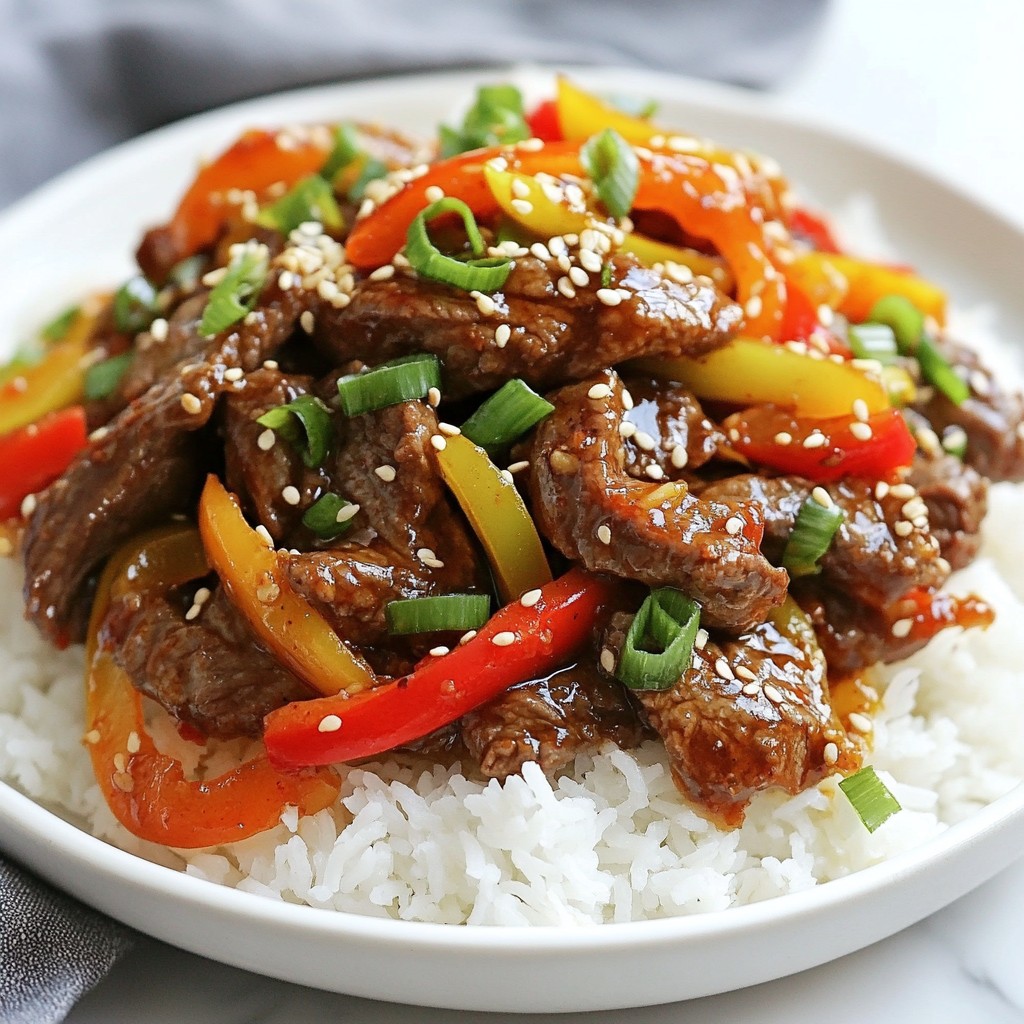
Looking to spice up your dinner routine? This Spicy Korean Beef Stir Fry is a flavor-packed dish that’s quick and easy to make! With tender beef, crisp bell peppers, and a fiery kick from gochujang, it’s sure to impress your family or friends. In just a few steps, you'll have a vibrant meal that bursts with taste. Let’s dive into this mouthwatering recipe and bring some Korean flair to your table!
Why I Love This Recipe
- Bold Flavors: This recipe combines the rich umami of beef with the spicy kick of gochujang, creating a savory explosion of taste in every bite.
- Quick and Easy:
- Colorful and Nutritious: The vibrant bell peppers and carrots not only add color to your plate but also provide essential vitamins and minerals.
- Customizable: You can easily adjust the spice level by varying the amount of gochujang or adding your favorite vegetables, making it a versatile dish.
Ingredients
Main Ingredients
- 1 lb beef sirloin, thinly sliced
- 2 cups mixed bell peppers, sliced
- 2-4 tablespoons gochujang
Additional Flavorings
- 2 tablespoons soy sauce
- 4 cloves garlic, minced
- 1 inch fresh ginger, grated
- 1 tablespoon toasted sesame oil
Garnishes
- 2 green onions, finely chopped
- Toasted sesame seeds
- Serve with rice or noodles
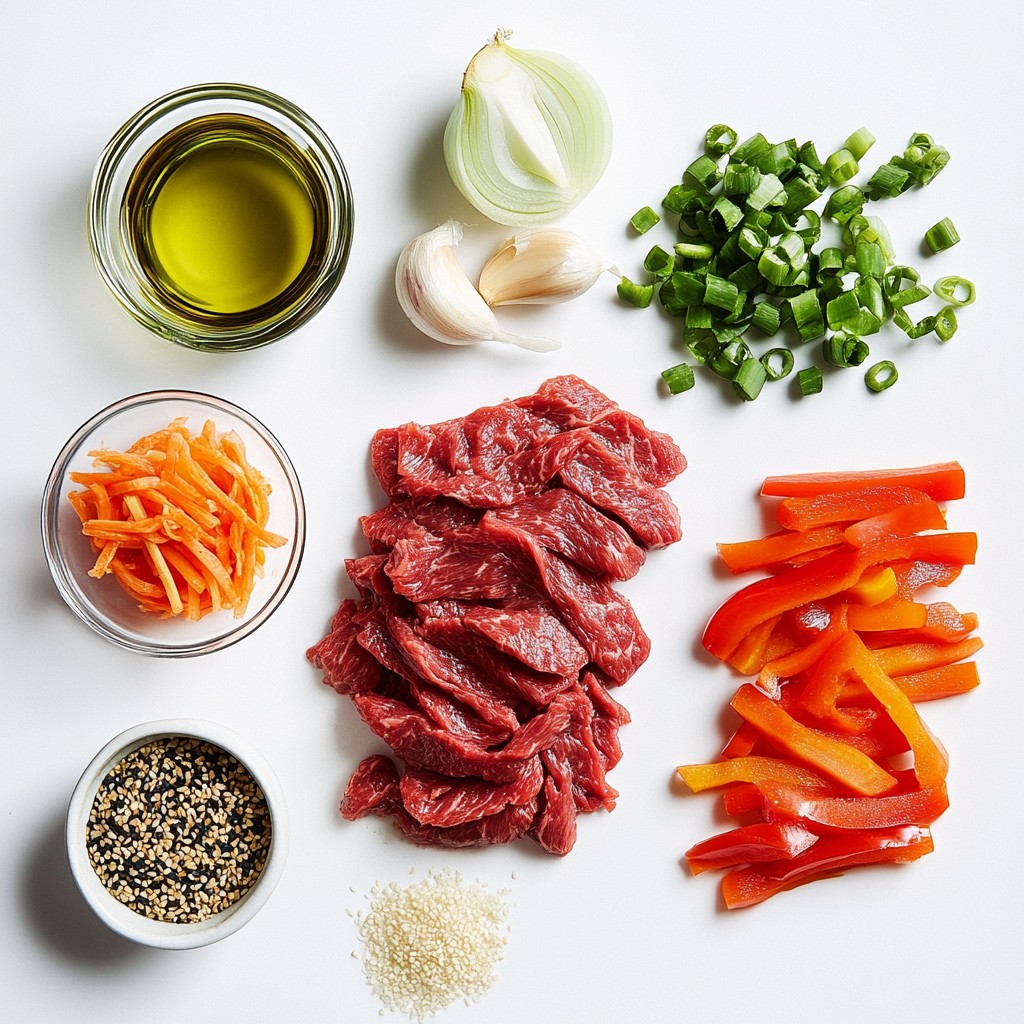
In this spicy Korean beef stir fry, the main ingredients bring bold flavors. The beef sirloin offers tenderness and richness. Mixed bell peppers add a crunchy texture and vibrant color. Gochujang, the star ingredient, brings the heat and depth.
For additional flavor, soy sauce adds saltiness. Garlic and ginger elevate the taste profile. The toasted sesame oil gives a nutty finish.
For garnishes, green onions provide freshness. Toasted sesame seeds add crunch. Serve this dish over rice or noodles for a complete meal. Each bite bursts with flavor, making it a favorite in my kitchen!
Step-by-Step Instructions
Marinate the Beef
- In a bowl, mix gochujang, soy sauce, and sugar.
- Add the thin beef slices and coat well.
- Let it sit for at least 15 minutes to soak up the flavors.
Sear the Beef
- Heat vegetable oil in a skillet over medium-high heat.
- Add beef in one layer, cooking it in batches.
- Stir-fry for 3-5 minutes until it turns brown and is cooked.
Cook the Vegetables
- Lower the heat and add sesame oil to the same skillet.
- Toss in sliced onions, bell peppers, and carrots.
- Stir-fry for 4-5 minutes, keeping them tender but crisp.
Infuse Flavor
- After the veggies are ready, add minced garlic and grated ginger.
- Stir-fry for one more minute until the garlic smells nice.
- Be careful not to burn the garlic, or it will taste bitter.
Combine Ingredients
- Put the cooked beef back into the skillet with the veggies.
- Toss everything together for about 2 minutes.
- This allows the sauce to coat all the ingredients nicely.
Garnish and Serve
- Take the skillet off the heat when done.
- Plate the stir fry and add chopped green onions on top.
- Sprinkle toasted sesame seeds for extra crunch and flavor.
Tips & Tricks
Choosing the Right Beef
For stir fry, beef sirloin is a great choice. It is tender and flavorful. You can also use flank steak or ribeye for more richness. Always slice the beef against the grain. This makes the meat tender and easy to chew. You want thin slices for quick cooking.
Adjusting Spice Levels
Gochujang packs a punch. If you like it milder, start with two tablespoons. You can always add more if you want more heat. If you want a sweeter taste, mix in a bit more sugar. This balances the heat well. For spice lovers, feel free to add extra gochujang or even some chili flakes.
Cooking Techniques
Stir-frying is all about high heat and quick cooking. Use a large skillet or wok to give your food space. Keep the heat on medium-high for the best results. It’s key to cook in batches. Overcrowding the pan can make the beef steam instead of sear. This keeps everything juicy and tasty.
Pro Tips
- Marinate for Maximum Flavor: Allow the beef to marinate for at least 15-30 minutes for deeper flavor penetration. If time permits, marinating overnight in the fridge will yield even better results.
- High Heat is Key: Ensure your skillet or wok is hot enough before adding the beef. This helps to sear the meat quickly, locking in moisture and flavor.
- Customize the Spice Level: Adjust the amount of gochujang based on your spice tolerance. Start with 2 tablespoons for a milder dish and increase as desired.
- Add Crunch with Fresh Vegetables: For added texture, consider tossing in other vegetables like snap peas or broccoli towards the end of cooking. They will stay crisp while absorbing the flavors.
Variations
Protein Alternatives
You can swap the beef for chicken, pork, or tofu. Each protein brings its own taste. For chicken, use boneless thighs or breasts. Pork tenderloin works well too. Tofu is a great choice for a plant-based meal.
- Cooking Times:
- Chicken: Cook for about 5-7 minutes.
- Pork: Cook for 4-6 minutes until just done.
- Tofu: Stir-fry for 3-5 minutes until golden.
Vegetable Substitutions
Feel free to change up the veggies! Broccoli, snap peas, or mushrooms add great flavor. You can also use zucchini or bok choy for a fresh twist.
- Seasonal Recommendations:
- Spring: Asparagus and peas.
- Summer: Zucchini and bell peppers.
- Fall: Carrots and squash.
- Winter: Cabbage and kale.
Gluten-Free and Low-Carb Options
If you need a gluten-free meal, try tamari instead of soy sauce. It has a similar taste and is safe for gluten-free diets.
- Alternative Carb Options:
- Serve with cauliflower rice for a low-carb choice.
- Use zucchini noodles for a fun twist.
- Try quinoa as a healthy grain option.
Storage Info
Refrigeration Guidelines
To store leftovers, let the stir fry cool down first. Then, place it in an airtight container. This keeps the flavors fresh. You can store it in the fridge for up to three days.
Freezing Instructions
For freezing stir fry, divide it into smaller portions. Use freezer-safe bags or containers to save space. When ready to eat, thaw in the fridge overnight.
How to Revive Leftovers
To reheat without losing texture, use a skillet over medium heat. Add a splash of water or broth to keep it moist. Stir often until heated through. For a fun twist, add leftover stir fry to a wrap or salad for lunch!
FAQs
Can I use frozen beef for this recipe?
Yes, you can use frozen beef. First, thaw it safely. Place it in the fridge overnight. If you're in a hurry, submerge it in cold water for quicker thawing. Once thawed, slice the beef against the grain. This helps keep it tender during cooking. When cooking frozen beef, sear it well to lock in flavor.
What's the best way to slice beef for stir fry?
For great stir fry, slice the beef thinly. Use a sharp knife for clean cuts. Always slice against the grain. This makes the meat tender. Aim for pieces about 1/4 inch thick. This size cooks quickly and evenly. If the beef is partially frozen, it’s easier to slice thinly.
How can I make this dish healthier?
To make your stir fry lighter, try these tips:
- Use lean cuts of beef, like sirloin.
- Cut back on the sugar in the sauce.
- Swap regular soy sauce for low-sodium soy sauce.
- Add more vegetables to fill your plate.
- Serve with brown rice or quinoa instead of white rice for added fiber.
These simple changes keep the flavor while lowering calories and sodium.
In this blog post, we covered how to make a delicious stir fry with beef sirloin and vibrant vegetables. We discussed key ingredients like gochujang and soy sauce, along with marinating techniques that enhance flavor.
We explored tips for choosing the right beef and adjusting spice levels for your taste. You can even swap proteins or vegetables for variety. Lastly, we provided storage tips to keep your leftovers fresh. Embrace these ideas to create a tasty meal you’ll love!