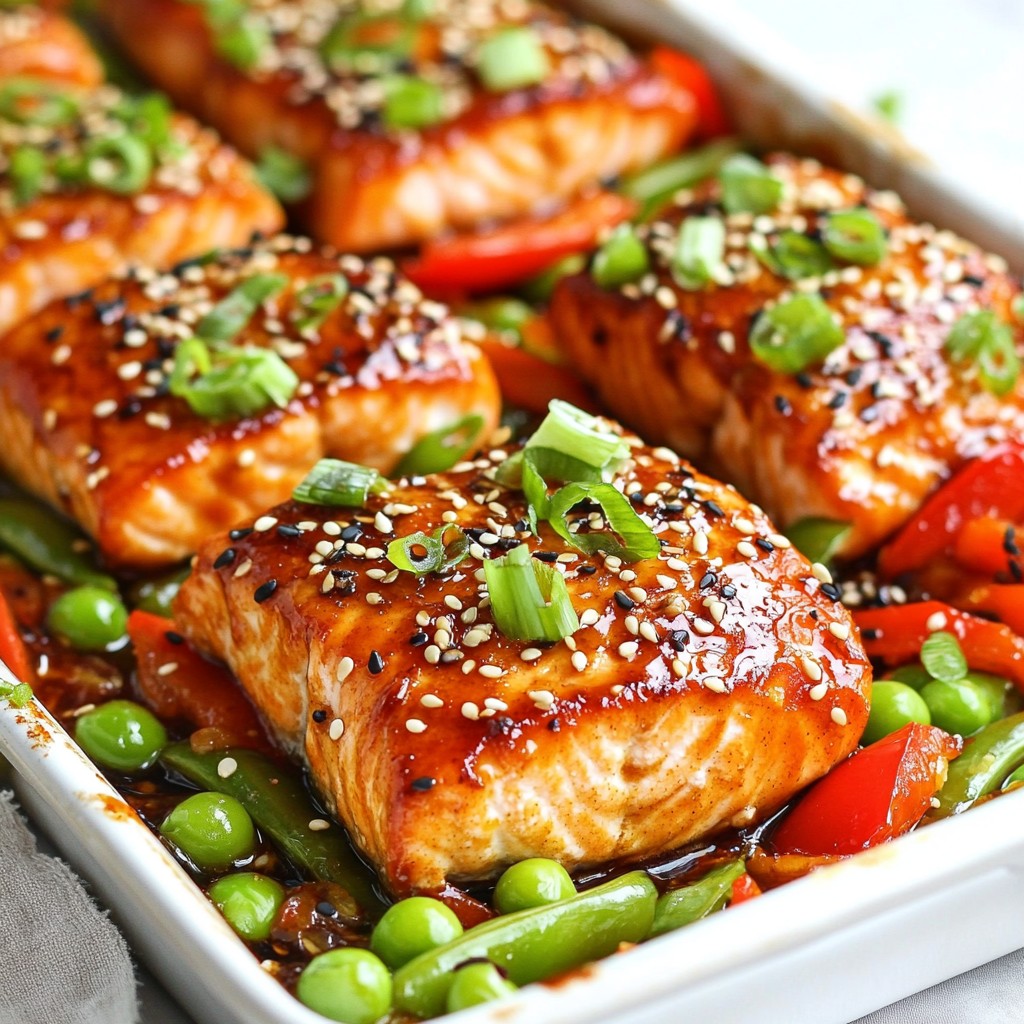
Looking for a quick, tasty dinner? Try my Sheet Pan Sesame Ginger Salmon! This dish combines fresh salmon, vibrant veggies, and a savory marinade, all cooked on one pan. It's perfect for busy nights when you crave something healthy yet delicious. With easy steps and minimal cleanup, you’ll have a meal ready in no time. Dive into the recipe and impress your taste buds!
Why I Love This Recipe
- Quick and Easy: This recipe comes together in just 25 minutes, making it perfect for busy weeknights.
- Flavorful Marinade: The combination of sesame oil, ginger, and honey creates a deliciously rich flavor that complements the salmon beautifully.
- One-Pan Wonder: Cooking everything on a single sheet pan means less cleanup and more time to enjoy your meal.
- Healthy and Colorful: Packed with vibrant vegetables, this dish is not only nutritious but also visually appealing on your table.
Ingredients
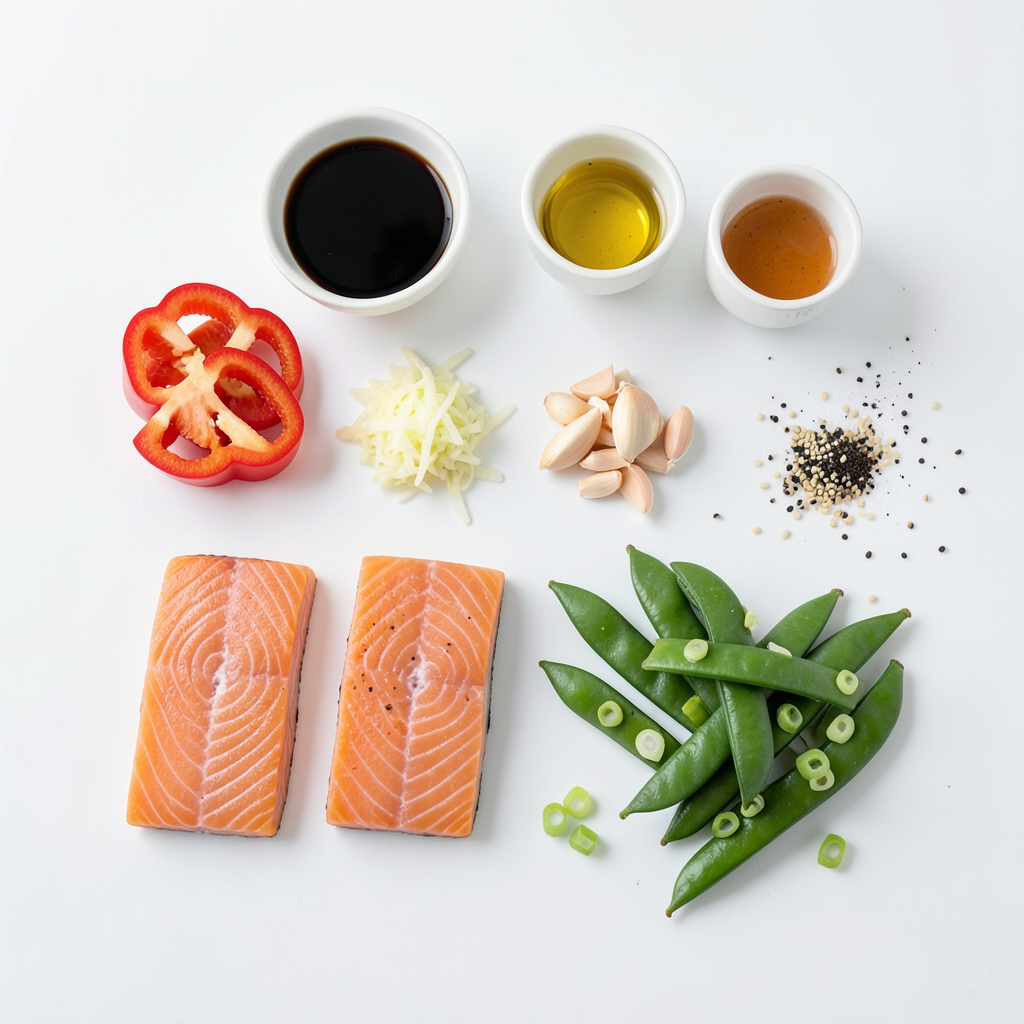
Main Ingredients for Sheet Pan Sesame Ginger Salmon
- 4 salmon fillets, skin-on for extra flavor
- 2 tablespoons low-sodium soy sauce
- 2 tablespoons toasted sesame oil
- 1 tablespoon fresh ginger, finely grated
- 1 tablespoon pure honey
- 2 cloves garlic, minced finely
- 1 teaspoon rice vinegar
Vegetables to Pair with Salmon
- 1 red bell pepper, sliced into thin strips
- 1 cup snap peas, trimmed
Garnishes and Additional Flavor Enhancers
- 1 tablespoon sesame seeds, toasted for extra aroma
- 2 green onions, finely chopped (for garnish)
- Salt and pepper to taste
When I make Sheet Pan Sesame Ginger Salmon, I gather fresh ingredients first. Salmon fillets are the star. They bring rich flavor and healthy omega-3s. I prefer skin-on fillets for added taste and crispiness.
Next, I reach for low-sodium soy sauce. This sauce gives depth without too much salt. Toasted sesame oil adds a nutty aroma and flavor. Fresh ginger is key; its zest brightens the dish. Pure honey balances the savory elements with a hint of sweetness.
Garlic is a must for a punch of flavor. I always mince it finely for even taste. Rice vinegar adds a nice tang that ties everything together.
For vegetables, I love red bell pepper. It adds color and sweetness. Snap peas are crisp and fresh, making them a perfect match.
Lastly, I sprinkle toasted sesame seeds on top. They add a lovely crunch. Green onions provide a fresh, bright finish. Don't forget salt and pepper to enhance all the flavors.
These ingredients come together to create a dish that is not only quick to prepare but also bursting with flavor.
Step-by-Step Instructions
Preheating and Preparing the Sheet Pan
First, preheat your oven to 400°F (200°C). This step is key to cooking the salmon evenly. Lining your sheet pan with parchment paper makes cleanup simple. It also keeps the salmon and veggies from sticking.
Making the Marinade
In a medium bowl, mix the marinade ingredients. Combine 2 tablespoons of soy sauce, 2 tablespoons of toasted sesame oil, and 1 tablespoon of grated ginger. Add 1 tablespoon of honey, 2 minced garlic cloves, and 1 teaspoon of rice vinegar. Season with salt and pepper. Whisk everything until it blends well. This marinade brings great flavor to the salmon.
Marinating the Salmon and Adding Vegetables
Place the salmon fillets on the lined sheet pan, skin-side down. Use a pastry brush to coat the fillets with half the marinade. Let the salmon sit for about 10 minutes. While it marinates, prepare your veggies. Scatter sliced red bell pepper and trimmed snap peas around the salmon. Drizzle the rest of the marinade over the veggies for added taste.
Baking Process
Place the sheet pan in the preheated oven. Bake for 12 to 15 minutes. The salmon is done when it flakes easily with a fork. The veggies should be tender but still crisp. This timing ensures everything cooks perfectly.
Tips & Tricks
Tips for Perfectly Cooked Salmon
To know when salmon is done, look for a few signs. The flesh should turn from translucent to opaque. It should also flake easily with a fork. If the salmon reaches an internal temperature of 145°F (63°C), it is fully cooked.
Adjust cook time based on fillet thickness. Thicker fillets may need extra minutes. For salmon that is one inch thick, bake for about 12-15 minutes. If your fillet is thicker, check it at 15-minute intervals.
Enhancing Flavor
You can boost the flavor of this dish with extra seasoning. Adding a pinch of red pepper flakes can give it a nice kick. A splash of lime juice can also brighten the taste.
Using fresh herbs adds a lovely touch. Chopped cilantro or basil can elevate the dish. You can sprinkle them on right before serving.
Kitchen Equipment Recommendations
For this recipe, use a heavy-duty sheet pan. A rimmed pan helps keep the juices contained. This makes for easy cleanup and prevents spills.
Other useful kitchen tools include a pastry brush for the marinade. A good set of measuring spoons ensures accuracy. A fish spatula helps you serve the salmon without breaking it.
Pro Tips
- Use Fresh Ingredients: Always opt for fresh ginger and garlic for the best flavor. They provide a vibrant taste that dried varieties cannot match.
- Marinate for Maximum Flavor: If time allows, marinate the salmon for up to 30 minutes in the refrigerator. This enhances the flavors even further.
- Perfectly Cooked Salmon: Keep an eye on the salmon while baking. Remove it from the oven as soon as it flakes easily with a fork to prevent overcooking.
- Customize Your Veggies: Feel free to swap or add other veggies like broccoli or carrots, depending on your preference and what's in season.
Variations
Alternative Marinade Options
You can switch up the marinade for your salmon. Instead of soy sauce, try fresh citrus juice. Lemon or lime adds a bright taste. You can also use spicy ingredients like sriracha. This gives your dish a nice kick. Experiment with different herbs, too. Fresh cilantro or basil can change the whole flavor. Think about what you enjoy and get creative!
Substitutions for Dietary Needs
If you need gluten-free options, use tamari instead of soy sauce. Tamari tastes great and works well in this recipe. For vegan versions, replace the salmon with tofu or tempeh. Just cube it and marinate like the salmon. This makes a delicious meal while keeping it plant-based. You can also use maple syrup instead of honey for a vegan sweetener.
Seasonal Vegetable Suggestions
Choosing the right veggies can enhance your dish. In spring, try asparagus or baby carrots. Summer brings zucchini and cherry tomatoes. Fall is perfect for squash or Brussels sprouts. In winter, go for root vegetables like carrots or parsnips. Select veggies based on what is fresh and in season. This not only tastes great but also supports local farms.
Storage Info
Storing Leftovers
To keep your salmon fresh, cool it down first. Let it sit at room temperature for no more than two hours. Afterward, store it in the fridge. Use these containers:
- Airtight glass or plastic containers
- Zip-top bags with air removed
These options keep the salmon tasty and safe.
Reheating Instructions
When reheating salmon, avoid drying it out. Try these methods:
- Microwave: Use medium heat for 30 seconds. Check and repeat if needed.
- Oven: Preheat to 300°F (150°C). Cover salmon with foil and heat for about 10 minutes.
Both methods work well for the vegetables too. Just ensure they are warm but not mushy.
Freezing Tips
Yes, you can freeze cooked salmon! Here’s how:
- Let the salmon cool completely.
- Wrap each piece tightly in plastic wrap, then place in a freezer bag.
To thaw, move it to the fridge overnight. You can also use the microwave on defrost. Enjoy the flavors even after freezing!
FAQs
How long does salmon take to bake?
Salmon typically takes 12 to 15 minutes to bake at 400°F (200°C). You want to check if the salmon flakes easily with a fork. This is a good sign it is done. For thicker fillets, you may need to add a few more minutes. Always keep an eye on it to avoid overcooking.
Can I use a different type of fish?
Yes, you can use other fish like trout or cod. These fish cook similarly and will absorb the marinade well. Just ensure you adjust the cooking time based on the thickness of the fillets. You may also want to try a firmer fish like swordfish for a different texture.
What side dishes pair well with Sesame Ginger Salmon?
Several side dishes go great with Sesame Ginger Salmon. Here are a few ideas:
- Steamed rice or quinoa adds a nice base.
- A fresh green salad adds crunch.
- Roasted broccoli or asparagus complements the flavors well.
- Noodles tossed in sesame oil can be a fun twist.
Feel free to mix and match based on what you enjoy!
This guide covered everything you need for Sheet Pan Sesame Ginger Salmon. We looked at the main ingredients, cooking steps, and ideal kitchen tips. Remember to choose fresh veggies and adjust seasonings to suit your taste. For leftovers, store properly and follow reheating tips to enjoy later. This dish is versatile and can adapt to different diets. With practice, you’ll master this easy meal. Your time in the kitchen will be fun and rewarding. Enjoy your cooking adventure!