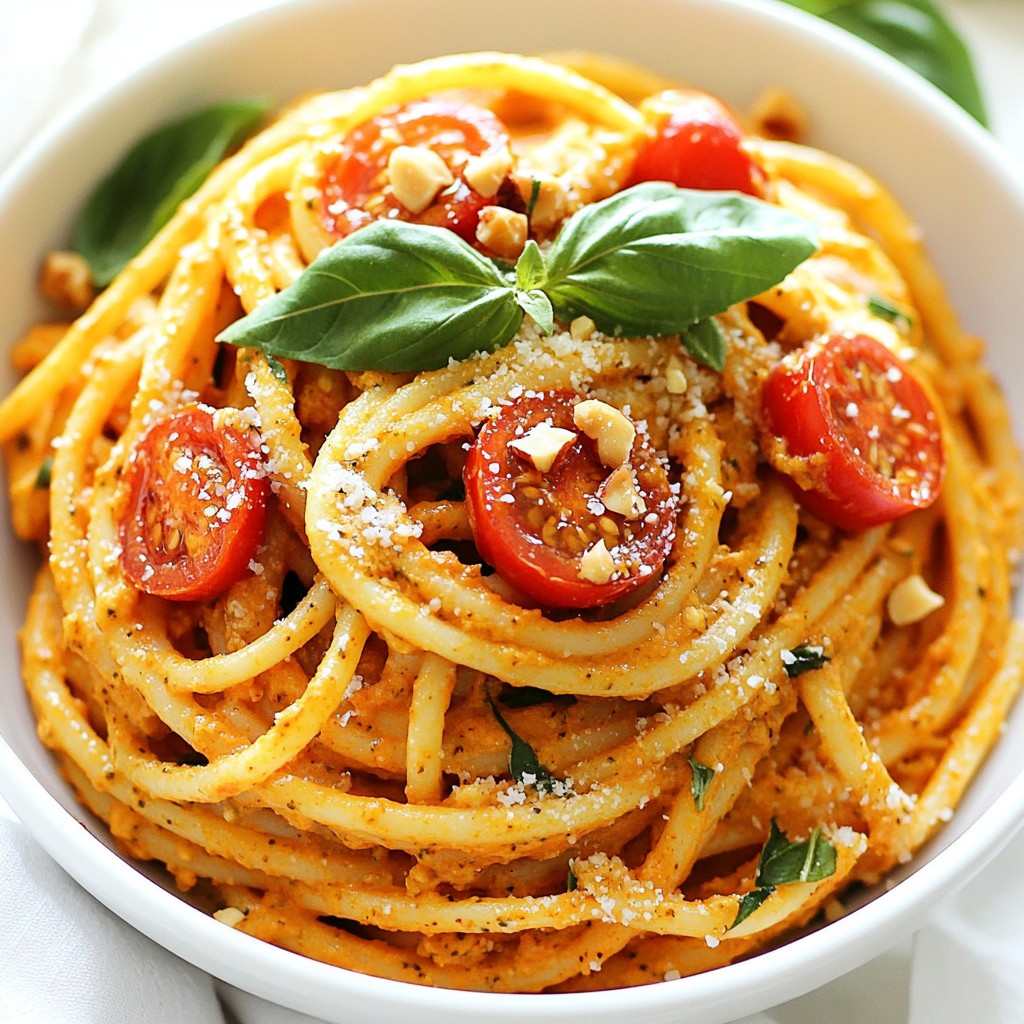
Craving something simple, tasty, and full of color? Roasted Red Pepper Pesto Pasta is the answer! This dish combines rich flavors with easy preparation, making it perfect for busy weeknights or special gatherings. In this guide, I’ll share simple ingredients, step-by-step instructions, and tips to help you master this savory meal. Let's jump in and transform your pasta game!
Why I Love This Recipe
- Vibrant Flavor: This pesto combines the sweetness of roasted red peppers with the freshness of basil, creating a deliciously vibrant and flavorful sauce.
- Easy to Make: With just a few simple steps, this recipe is quick and easy, making it perfect for busy weeknight dinners.
- Customizable: Feel free to swap out the nuts or cheese to suit dietary preferences or ingredient availability!
- Beautiful Presentation: The colorful garnishes of cherry tomatoes and fresh basil make this dish visually appealing, perfect for serving guests.
Ingredients
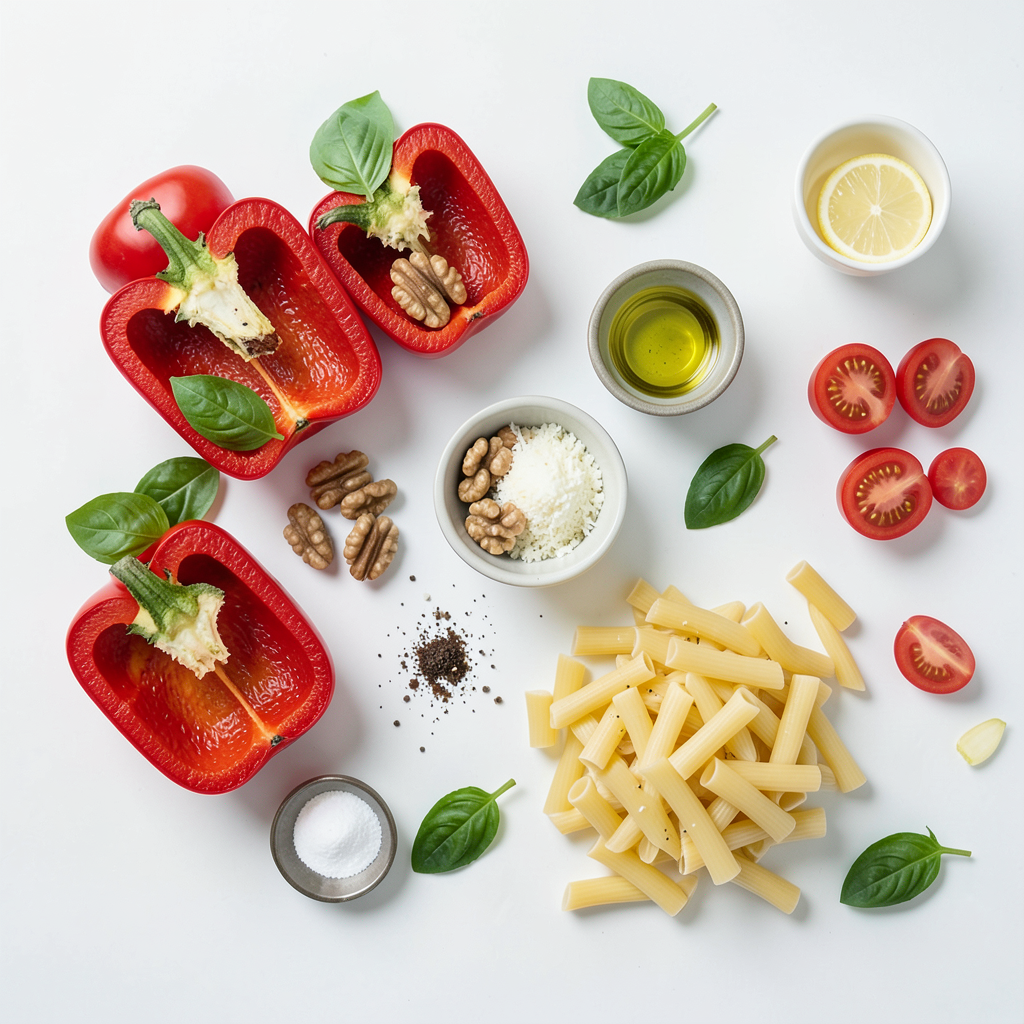
Complete Ingredient List
- 2 large roasted red bell peppers
- 1 cup fresh basil leaves
- 1/2 cup walnuts
- 2 cloves garlic
- 1/2 cup extra virgin olive oil
- 1/4 cup grated Parmesan cheese
- Zest and juice of 1 fresh lemon
- Salt and freshly ground black pepper
- 12 ounces pasta (penne, spaghetti, or fusilli)
- 1/2 cup cherry tomatoes
- Extra fresh basil leaves
Notes on Ingredient Quality
Using fresh ingredients makes a big difference in flavor. Look for ripe, vibrant bell peppers. Fresh basil should be bright green and fragrant. For the best taste, choose high-quality extra virgin olive oil and real Parmesan cheese. If you enjoy nuts, select fresh walnuts or pine nuts for a rich flavor.
Suggested Substitutions
You can swap walnuts for pine nuts if you want a different taste. If you're vegan, use nutritional yeast instead of Parmesan cheese. For gluten-free pasta, a rice or quinoa-based option works well. You can also use spinach or arugula in place of basil for a new twist.
Step-by-Step Instructions
Preparing the Roasted Red Peppers
First, if you use fresh red bell peppers, turn on your oven to 450°F (230°C). Place the peppers on a baking sheet. Roast them for 20 to 25 minutes. Watch for the skins to char and blister. After roasting, put the peppers in a bowl. Cover the bowl with plastic wrap. This steaming step helps with peeling. Wait about 10 minutes. When they are cool, peel off the skins. Remove the seeds and chop the peppers into smaller pieces.
Making the Pesto Mixture
Grab a food processor for this part. Add the roasted red peppers, fresh basil leaves, walnuts, and minced garlic. Also, add the zest and juice of one lemon. Pulse the mixture until it forms a coarse paste. It should not be too smooth yet. Next, keep the food processor running. Slowly pour in the olive oil. This will help the pesto blend fully. Stop to scrape the bowl sides a couple of times. This way, all the ingredients mix well.
Cooking and Combining the Pasta
While you make the pesto, boil a large pot of salted water. Add your pasta and cook as the package says. You want it to be al dente, which means it should still have a little bite. Before you drain it, save one cup of the pasta water. Drain the pasta well when it’s done. Now, grab a big mixing bowl. Add the hot pasta to your roasted red pepper pesto. Toss it well so the pesto coats every piece of pasta. If it looks too thick, mix in some of the reserved pasta water. This will give you a creamy texture.
Tips & Tricks
How to Perfect the Pesto Texture
To get the best pesto texture, aim for a smooth but slightly chunky mix. Start by blending the roasted red peppers, basil, walnuts, garlic, lemon zest, and lemon juice in your food processor. Pulse it until it looks like a coarse paste. Then, while it runs, drizzle in the olive oil slowly. This helps blend it well. If it feels too thick, add a bit of reserved pasta water. This makes it creamy and easy to coat your pasta.
Storing Leftover Pesto
If you have leftover pesto, store it in an airtight container. To keep it fresh, pour a thin layer of olive oil on top before sealing. This reduces air exposure. You can keep it in the fridge for up to a week. If you want to save it longer, freeze the pesto in ice cube trays. Once frozen, transfer the cubes to a bag. This way, you can use small amounts later.
Cooking Pasta Al Dente
Cooking pasta al dente means it should be firm but not hard. Start boiling salted water and add your pasta. Check the package for the cooking time. Taste the pasta a minute or two before it's done. It should have a slight bite, not mushy. If you follow these steps, your pasta will hold up well with the pesto. This texture makes every bite delightful.
Pro Tips
- Use Fresh Ingredients: Fresh basil and high-quality olive oil elevate the flavor of your pesto significantly. Whenever possible, opt for the freshest ingredients you can find.
- Adjust Consistency: If your pesto is too thick, don't hesitate to add a little pasta water to achieve a creamy, smooth texture. It's a great way to enhance the dish without additional ingredients.
- Personalize Your Nuts: While walnuts are traditional, feel free to experiment with different nuts like almonds or pecans for a unique twist on the classic pesto flavor.
- Garnish for Appeal: Adding cherry tomatoes and fresh basil not only enhances the flavor but also adds a pop of color, making your dish visually appealing.
Variations
Vegan Option Substitutions
To make this dish vegan, swap the Parmesan cheese for nutritional yeast. This gives a cheesy flavor without using dairy. You can also replace walnuts with sunflower seeds for a nut-free option. Use fresh or jarred roasted red peppers, as both work well. This way, your dish stays rich and tasty while being plant-based.
Gluten-Free Pasta Choices
For a gluten-free option, use pasta made from rice, quinoa, or lentils. Many brands offer great gluten-free pasta that cooks well. Just make sure to check the package for cooking times. You can use gluten-free penne or spaghetti for a similar texture to traditional pasta. This way, everyone can enjoy the meal.
Additional Flavor Enhancements
You can boost the flavor of your pesto pasta in various ways. Try adding a pinch of red pepper flakes for heat. You can mix in sun-dried tomatoes for a tangy twist. Fresh herbs like parsley or mint add a refreshing touch. Lastly, a squeeze of lemon juice brightens the dish, making it more vibrant. These simple changes enhance your meal and keep it exciting.
Storage Info
Best Practices for Storing Pasta
To keep your roasted red pepper pesto pasta fresh, store it in a sealed container. Let the pasta cool to room temperature before placing it in the fridge. Use it within three days for the best taste. If you have leftover pesto, store it separately to keep the pasta from getting soggy. You can also add a bit of olive oil on top of the pesto to help it stay fresh.
Reheating Tips
When you’re ready to enjoy your pasta again, reheat it gently. You can use the microwave or a skillet. If using a microwave, heat it in short bursts. Stir it often to warm it evenly. If using a skillet, add a splash of water or extra olive oil. This helps to keep it moist and tasty. Heat it on low until warmed through.
Freezing Pesto for Later Use
Freezing your pesto is a great way to save it for later. Start by placing the pesto in ice cube trays. Once frozen, pop the cubes into a freezer bag. This makes it easy to use just the right amount later. When you’re ready to use it, thaw the pesto in the fridge overnight or use it straight from the freezer in your cooking. It keeps well for up to three months frozen.
FAQs
How to make Roasted Red Pepper Pesto Pasta?
To make Roasted Red Pepper Pesto Pasta, start by roasting the red peppers. You can use jarred peppers for ease. Then, blend roasted peppers with basil, walnuts, garlic, lemon zest, and juice. Slowly add olive oil to create a smooth pesto. Cook your pasta until al dente, then mix it with the pesto. Add reserved pasta water if needed to reach the right texture. Finally, serve it hot with cherry tomatoes and fresh basil on top.
What types of pasta work best for this recipe?
You can use many types of pasta for this dish. I recommend penne, spaghetti, or fusilli. These shapes hold the pesto well, giving you a balanced bite. Choose your favorite pasta, and remember to cook it al dente for the best texture.
Can I make the pesto in advance?
Yes, you can make the pesto ahead of time. Store it in an airtight container in the fridge. Add a thin layer of olive oil on top to keep it fresh. The flavors will deepen, making it even tastier when you use it later. Just stir it before mixing with pasta.
How long does this dish last in the fridge?
Roasted Red Pepper Pesto Pasta can last in the fridge for about 3 days. Make sure to store it in a sealed container. Reheat it gently to enjoy the flavors again.
Can I freeze the pesto?
Yes, you can freeze the pesto! Pour it into ice cube trays for easy portions. Once frozen, transfer the cubes to a zip-top bag. This way, you can enjoy homemade pesto anytime.
What can I add for extra flavor?
For extra flavor, try adding sun-dried tomatoes or olives. Grilled chicken or shrimp also pairs well with this dish. You can even sprinkle more Parmesan cheese on top for a richer taste.
This article covered how to make Roasted Red Pepper Pesto Pasta. We explored the ingredients, quality tips, and substitutions. I shared step-by-step instructions, plus helpful tips for perfect results. You learned variations for vegan and gluten-free needs, and how to store leftovers.
In summary, making this pasta dish is easy and fun. With the right ingredients and methods, you’ll impress everyone. Enjoy the flavors, and feel free to get creative!